Why Your Small Business Needs a Website When Your Physical Shop Is No Longer Enough

Updated: Sep 22
Contents :
“Why is my business not giving me the return it used to?” The Problem Isn't Always Your Business — It May Be Your Reach Your Website Can Become Your New Showroom An E-Commerce Store Can Turn Your Products Into a 24/7 Business Your Website Can Make Your Small Business Look Bigger Without Pretending to Be Big Your Years of Experience Should Not Stay Inside Your Shop Don't Let Your Business Depend Only on Footfall Your Website Should Bring Customers Closer to You You Don't Need to Close Your Shop to Go Digital What a Small Business Website Should Actually Include Your Website Can Work While You Are Running Your Business Small Business + Website + E-Commerce = A Bigger Opportunity Don't Wait Until the Physical Shop Stops Working Your Business Doesn't Need to Become Big. It Needs to Become Visible. The Next Step for Your Business Ready to Take Your Business Online?
There was a time when opening a shop on a busy market road was enough.
You found a good location, put up a signboard, filled the shelves, waited for customers, and slowly built your business through reputation and word of mouth.
But things have changed.
Today, the shop may still look good. The products may still be excellent. You may have years of experience and loyal customers. Yet at the end of the month, you look at the rent, electricity, staff salaries, maintenance and inventory sitting inside the shop and ask yourself:
“Why is my business not giving me the return it used to?”
This is the reality many small-business owners are facing.
Big showrooms are expanding. National brands are entering local markets. Customers compare products on their phones before visiting a store. And sometimes, they don't visit the store at all.
That doesn't mean your business is finished.
It means the way customers find businesses has changed.
And this is where your website can become much more than an online presence.
Your Shop Is Still Important — But It Can't Be Your Only Shop

Your physical shop has a location.
Your website doesn't.
A customer may never walk past your shop, but they can still find your business online.
Think about your own buying habits.
Before buying something expensive, you probably search online. You look at photographs. You compare products. You check reviews. You visit websites. You look at Instagram. You may send a WhatsApp message before deciding whether to visit the store.
Your customers are doing exactly the same thing.
So imagine having a second storefront that is open 24 hours a day, seven days a week.
No rent for another location.
No additional showroom interior.
No extra front desk.
No customer has to pass your physical shop to discover you.
That is what your website can become.
The Problem Isn't Always Your Business — It May Be Your Reach
Many small businesses make the same mistake when sales slow down.
They think:
“I need a better shop.”
So they spend more money on interiors.
Then:
“I need a better location.”
So they move to a more expensive market.
Then:
“I need more products.”
So they invest more money in inventory.
But what if the real problem is simpler?
Not enough of the right customers are finding you.
You could have the best products in your market, but if only 50 people see them, your sales are limited to those 50 people.
Your physical shop depends heavily on people coming to you.
A website allows you to start reaching people before they decide to visit you.
That difference can completely change the way a small business attracts customers.
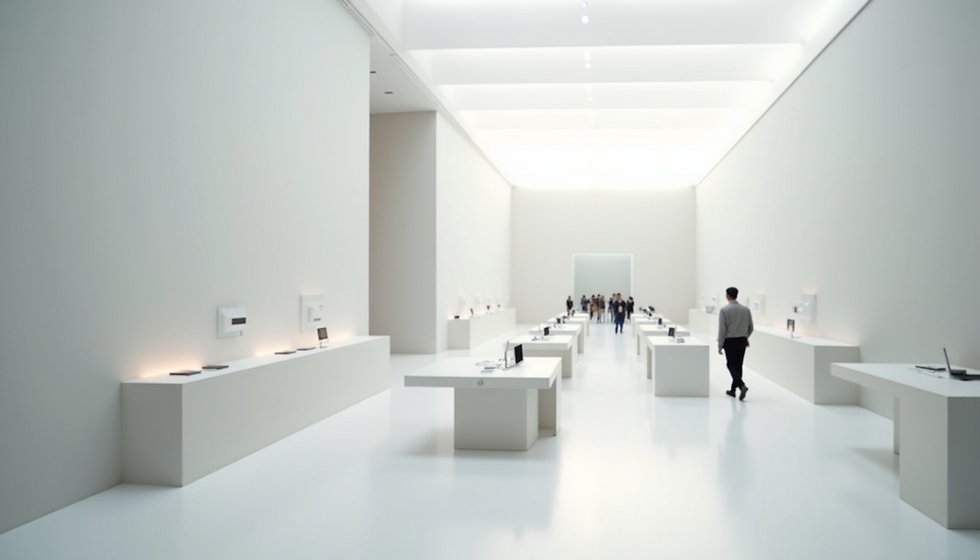
Your Website Can Become Your New Showroom

A good website isn't just your company name, phone number and address.
It should feel like walking into your business.
If you sell furniture, customers should be able to see your products beautifully presented.
If you sell clothing, they should be able to explore collections.
If you manufacture products, they should be able to understand what you make and who you serve.
If you provide services, they should be able to see your work, understand your process and see why customers trust you.
If you sell products that can be shipped, an e-commerce website can take that one step further.
Instead of waiting for someone to enter your physical shop, your products can be available to customers wherever they are.
Your shop becomes one part of your business.
Your website becomes another.
What If Your Customer Lives 100 Kilometres Away?
This is where the difference becomes powerful.
Your physical shop might attract customers from your city.
Your website can attract customers from other cities.
A customer in Chandigarh can discover a business in Amritsar.
A customer in Delhi can find a manufacturer in Ludhiana.
A customer in Mumbai can discover a specialist business in Jaipur.
And if the business can ship products or provide services remotely, the physical distance becomes much less important.
You don't need to open a showroom in every city.
You can take your showroom to the customer through the internet.
That is one of the biggest opportunities a small business has today.
An E-Commerce Store Can Turn Your Products Into a 24/7 Business
If you already have products sitting inside your shop, ask yourself a simple question:
Why should those products only be available to people who physically visit your store?
An e-commerce website can allow customers to:
Browse your products
See professional photographs
Read product information
Check prices
Place orders
Make payments
Request information
Contact you through WhatsApp
Buy from outside your city
Your physical store doesn't disappear.
It simply gains another sales channel.
Instead of relying completely on footfall, you start building digital traffic as well.
And unlike a physical shop that closes at night, your online store can continue presenting your products while you sleep.
Your Website Can Make Your Small Business Look Bigger Without Pretending to Be Big
This is especially important when you are competing with large companies.
A big company may have a huge showroom.
You may have a small one.
A big company may have a large marketing department.
You may have yourself and two employees.
A big company may spend heavily on advertising.
You may not be able to.
But online, you can still create a professional customer experience.
Clear information.
Customer reviews.
Easy WhatsApp contact.
Simple enquiry forms.
Online ordering.
A well-presented portfolio.
These things can make a small business feel professional, trustworthy and established.
You don't need to pretend to be a multinational company.
You simply need your digital presence to reflect the quality of the business you have already built.
Your Years of Experience Should Not Stay Inside Your Shop
Think about everything you have built.
Maybe your father started the business.
Maybe you started it yourself 15 years ago.
Maybe you have hundreds of satisfied customers.
Maybe people in your city already know your name.
Maybe you have products that took years to develop.
Maybe you have knowledge that your competitors don't have.
But how much of that can a new customer see from outside your shop?
Very little.
Your website gives you a place to tell that story.
Your experience becomes content.
Your previous work becomes a portfolio.
Your customers become testimonials.
Your products become an online catalogue.
Your knowledge becomes useful content.
Your business story becomes part of your brand.
Instead of being known only by people who have already met you, you can start becoming known by people who are still searching.
Don't Let Your Business Depend Only on Footfall
Footfall is unpredictable.
One day the market is crowded.
The next day it is quiet.
Weather changes.
Competition changes.
A new showroom opens.
Parking becomes difficult.
Customers start buying from another area.
A large chain enters your market.
Your rent doesn't care about any of those things.
It keeps coming.
This is why depending entirely on physical customers can become dangerous for a small business.
A website gives you another opportunity.
Someone may discover you through Google.
Someone may see your Instagram post and visit your website.
Someone may receive your website link through WhatsApp.
Someone may find your product through an online search.
Someone may visit your e-commerce store at midnight.
The more ways customers can discover you, the less dependent your business becomes on people simply walking past your shop.
Your Website Should Bring Customers Closer to You
A website should not make your business feel distant or corporate.
It should do the opposite.
Make it easy for customers to contact you.
Add WhatsApp.
Show your phone number.
Show your location.
Display real photographs.
Show the people behind the business.
Share customer experiences.
Explain your products.
Answer common questions.
Give customers a reason to trust you.
The goal isn't to make the customer feel like they are dealing with a machine.
The goal is to make them feel:
“There is a real business behind this website, and I can reach them when I need them.”
That feeling matters.
Especially for small businesses.
You Don't Need to Close Your Shop to Go Digital

Going online doesn't mean abandoning your physical business.
Your shop can continue doing what it does best.
Customers can visit.
They can see products physically.
They can speak with you.
They can experience your service.
But your website can work alongside it.
Think of your business as having two doors.
One door is your physical shop.
The other is your website.
Some customers will enter through the first.
Others will enter through the second.
And some will discover you online and eventually walk through your physical door.
That is the real advantage.
You don't have to choose between offline and online.
You can connect them.
What a Small Business Website Should Actually Include
You don't necessarily need a complicated website with hundreds of pages.
You need a website that answers the customer's important questions.
A strong small-business website should usually include:
A clear homepage — Tell people immediately what you sell and who you serve.
Products or services — Show what customers can actually buy from you.
Professional photographs — Let people see your work properly.
About your business — Tell your story and build familiarity.
Reviews and testimonials — Show that real customers trust you.
Contact and WhatsApp — Make it easy to start a conversation.
Location and business information — Help local customers find you.
E-commerce functionality, when appropriate — Allow customers to browse and purchase online.
SEO-friendly content — Give Google a reason to show your business when people search.
The objective isn't to build a website just for the sake of having one.
The objective is to build a website that helps sell your business.
Your Website Can Work While You Are Running Your Business
One of the biggest problems for small-business owners is time.
You are managing customers.
Checking stock.
Talking to suppliers.
Handling employees.
Managing payments.
Solving problems.
There isn't always time to explain the same thing to every potential customer.
Your website can handle part of that conversation.
A customer wants to know what you offer?
The website explains it.
They want to see your products?
The website shows them.
They want to know where you are?
The website tells them.
They want to see previous work?
Your portfolio is there.
They want to contact you?
WhatsApp or your enquiry form is ready.
Your website doesn't replace you.
It gives you more time by doing some of the repetitive work for you.
Small Business + Website + E-Commerce = A Bigger Opportunity
Imagine your current situation.
You have:
A physical shop + products + experience + customers.
Now add:
Website + Google visibility + WhatsApp + e-commerce.
Suddenly, your business has more ways to reach people.
A customer can discover you.
They can research you.
They can trust you.
They can contact you.
They can visit your shop.
Or, if you sell online, they can simply buy.
This is not about chasing technology.
It is about protecting the business you have already worked so hard to build.
Don't Wait Until the Physical Shop Stops Working
This may be the most important point.
Don't wait until sales collapse.
Don't wait until the rent becomes impossible.
Don't wait until the big showroom next door takes your customers.
Don't wait until your competitors have already built their online audience.
Build your digital presence while your business is still strong.
Your website can take time to build authority.
Your Google visibility can take time.
Your content can take time to generate traffic.
Your online reputation can take time to develop.
The earlier you start, the more digital ground you can build around your business.
Your Business Doesn't Need to Become Big. It Needs to Become Visible.
This is the heart of the issue.
Maybe you don't want 50 employees.
Maybe you don't want 10 branches.
Maybe you don't want a giant showroom.
Maybe you simply want your business to continue supporting your family, your employees and your future.
That's completely valid.
A small business doesn't have to become a giant company to succeed.
But it does need customers.
And customers need to be able to find you.
Your website can help make that happen.
Your physical shop represents where your business is.
Your website represents where your business can go.
The Next Step for Your Business
If your physical shop is no longer giving you the return it once did, don't immediately assume that your business has lost its value.
Maybe your business hasn't become less valuable.
Maybe your customers have simply changed where they look.
The answer may not be another expensive showroom.
It may be a professional website.
And if you sell products, it may be an e-commerce store that allows your business to sell beyond its physical location.
Your shop has already taken years to build.
Your reputation has already been earned.
Your products already exist.
Your knowledge already exists.
Now give all of that a digital home.
Because the future of your small business doesn't necessarily require a bigger building.
It may simply require a bigger reach.
Ready to Take Your Business Online?
At Three Sixty Plus, we help businesses turn their existing products, services and brand into professional digital experiences — from website design and development to e-commerce, branding, photography and SEO.
Your business already has a story.
Your website should help more people discover it.
Define what's next?


Comments